Back to BlogBrake Service
7 Warning Signs Your Brakes Need Service Right Now
June 17, 2026 6 min readBy T&H Tire And Auto Service
Squealing, grinding, pulsing, and a soft pedal all mean different things. Here is how to read the warning signs before they become a safety issue.
1. A high-pitched squeal when you brake
Most brake pads have a small metal wear indicator that is designed to squeal against the rotor once the friction material gets thin. It is not a sound to ignore — it means your pads are close to the end of their life and should be inspected within the next week or two.
2. A deep grinding noise
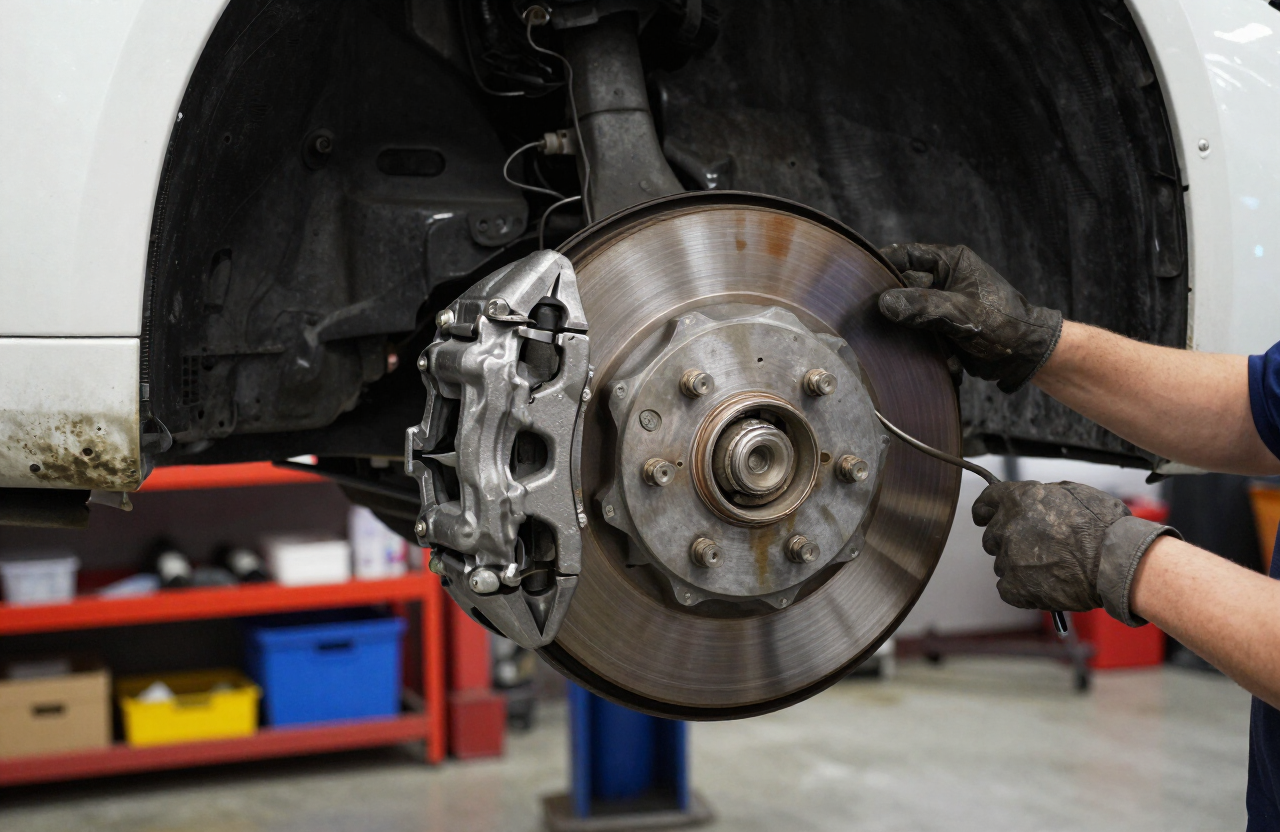
Grinding usually means the pad material is completely worn away and metal is now contacting metal — pad backing plate against rotor. This causes expensive rotor damage fast, and can extend your stopping distance significantly. Get this looked at immediately.
3. Pulsing or vibration in the brake pedal
A pulsing pedal, especially during highway braking, typically means your rotors have developed uneven wear or warping from heat cycling. This is common after long descents or heavy stop-and-go traffic on I-40. Resurfacing or replacing the rotors restores a smooth, confident pedal feel.
4. The car pulls to one side when braking
This can point to a stuck caliper, uneven pad wear, or a brake line issue on one side of the vehicle. It is a handling problem, not just a comfort issue — a stuck caliper can overheat and fail entirely if left unaddressed.
5. A soft, spongy brake pedal
A pedal that sinks toward the floor usually means air has gotten into the brake lines or the master cylinder is failing. This is a safety-critical issue that needs same-day attention — do not drive on a spongy pedal.
6. The brake warning light is on
Modern vehicles monitor pad thickness and hydraulic pressure electronically. If the brake light illuminates on your dash, treat it as a direct message from your car that a inspection is due, not something to clear and forget.
7. It has simply been a while
Brake pads typically last 25,000-65,000 miles depending on driving style, and rotors often need attention every second pad change. If you cannot remember your last brake inspection, that alone is reason enough to schedule one — we check pads, rotors, calipers, and lines for free with every visit.
Need this looked at in person?
Our team offers free inspections at 3602 Old Hickory Blvd.
Questions & Answers
Frequently Asked Questions
Common questions our technicians hear about brake service.
Brake pads typically last 25,000 to 65,000 miles depending on your driving style, road conditions, and pad material. City driving with frequent stops wears pads faster than highway driving.
Still have a question? Contact our team or give us a call and we will walk you through it.
Ready to get your vehicle checked?
Our ASE-certified team is ready to help with tires, brakes, oil changes, suspension, and more.